


About Celebrate Recovery
Some people know exactly what is controlling their life.
The bottle.
The drug.
Pornography.
Gambling.
For others, it is harder to name.
Anger that keeps damaging relationships.
A desperate need for approval.
Patterns learned in a dysfunctional home.
Resentment that has been carried for years.
Relationships that repeatedly become unhealthy.
Pain from abuse that was never really confronted.
The behavior may look different.
Underneath it, someone is hurting.
Celebrate Recovery was created for that person.
And for the person who hasn't yet realized they are that person.
Recovery Is Bigger Than Addiction
The word recovery immediately makes many people think of drugs and alcohol.
Celebrate Recovery intentionally widens the conversation.
It speaks about hurts, hang-ups, and habits.
A hurt can be something done to you.
A hang-up can be an attitude, emotional pattern, or way of thinking that keeps interfering with life.
A habit can become a behavior you repeatedly return to even when you know what it is costing you.
Sometimes all three become connected.
Pain produces a coping mechanism.
The coping mechanism becomes destructive.
The consequences produce more pain.
Celebrate Recovery gives people somewhere to interrupt that cycle.
You Don't Have to Pretend Here
Church can sometimes become the place where struggling people feel the greatest pressure to appear fine.
Celebrate Recovery tries to create the opposite environment.
People arrive carrying real stories.
Addiction.
Divorce.
Abuse.
Anger.
Shame.
Family dysfunction.
Sexual brokenness.
Fear.
Codependency.
Grief.
Failure.
The point isn't to gather people who have already fixed themselves.
It is to create a grace-filled community where people can become honest about what hurts and the unhealthy ways they have learned to respond to that pain.
Recovery begins when hiding starts losing its power.
Start With Powerlessness
Celebrate Recovery uses a Christ-centered 12-step process.
That means the familiar language of recovery is present, but its spiritual center is made explicit.
The first step admits powerlessness.
The third turns life and will over to God's care.
Participants take a moral inventory.
Confess.
Become willing to change.
Make amends when doing so will not cause further harm.
Practice continuing self-examination.
Develop prayer and spiritual habits.
Eventually, recovery turns outward as people begin helping others.
The process isn't simply about stopping something.
It is about becoming someone different.
Jesus Isn't an Undefined “Higher Power”
This is one of Celebrate Recovery's clearest distinctions from many traditional 12-step environments.
Its Higher Power has a name.
Jesus Christ.
Celebrate Recovery describes itself as Christ-centered rather than merely spiritually oriented.
The ministry teaches that people ultimately find freedom and healing through a relationship with Jesus.
That doesn't mean participants are expected to arrive spiritually mature.
People can walk in confused, skeptical, ashamed, angry, or unsure of what they believe.
But the program itself isn't religiously neutral about where healing is found.
Christ is at the center.
The Beatitudes Become a Recovery Roadmap
Celebrate Recovery also organizes its approach around Eight Principles based on the Beatitudes of Jesus.
“Blessed are the poor in spirit” becomes connected with admitting that life has become unmanageable.
Those who mourn encounter God's comfort.
Meekness becomes surrendering control to Christ.
Purity of heart accompanies honest examination and confession.
Hungering for righteousness becomes willingness to change.
Mercy and peacemaking become forgiveness and amends.
Prayer and Scripture become ongoing practices.
Finally, recovery becomes mission as a person yields to God and carries the Good News to others.
The Beatitudes aren't merely read at meetings.
They become a framework for recovery.
Tell the Truth About Yourself
One of the hardest parts of recovery is inventory.
Celebrate Recovery asks participants to examine their lives honestly.
Where have I been hurt?
Who am I angry with?
What am I afraid of?
Where have I hurt others?
What patterns keep repeating?
What am I hiding?
Where am I responsible?
That distinction matters.
Recovery cannot mean accepting responsibility for abuse someone else committed against you.
Neither can it mean blaming everyone else for harm you have caused.
Healthy inventory learns to separate the two.
What happened to me?
What have I done?
Both may need healing.
Only one belongs to me as responsibility.
Confession Breaks Isolation
Some things become stronger in secrecy.
Addiction can.
Shame can.
Resentment can.
Sexual sin can.
Fear can.
Celebrate Recovery deliberately brings another trusted person into the recovery process.
Participants don't simply acknowledge their struggles privately.
They learn to speak honestly with God and with safe people.
That vulnerability is uncomfortable.
It is also one of the reasons community matters.
Someone else finally knows.
And they stayed.
Small Groups Make a Large Ministry Personal
A Celebrate Recovery gathering can include worship, teaching, testimony, fellowship, and Open Share Groups.
The larger meeting establishes a common recovery environment.
The smaller group creates room to talk.
Participants can hear from people dealing with similar struggles.
They can share without needing to perform.
They can learn from someone further along in recovery.
Confidentiality and group guidelines help create boundaries around those conversations.
Nobody is supposed to walk into the room and become someone else's project.
People share their own experience.
Healing happens in community.
Go Deeper Through Step Study
Open Share Groups provide ongoing support.
Step Studies take participants deeper into the recovery process.
These smaller groups work systematically through Celebrate Recovery's principles and steps over an extended period.
Participants write.
Reflect.
Answer difficult questions.
Complete inventories.
Discuss what they are learning.
The pace is intentionally slower.
Recovery isn't treated like a weekend emotional experience.
Patterns developed over years may take time to understand and change.
Step Study creates space for that deeper work.
Find Someone Who Will Walk With You
Celebrate Recovery also emphasizes sponsorship and accountability.
A sponsor isn't there to control someone's life.
They are another person in recovery who can listen, encourage, challenge, and help someone continue working the process.
Accountability partners provide additional relationships.
That matters because isolation often helps destructive patterns survive.
Recovery creates another structure.
When temptation comes, call someone.
When you want to disappear, someone notices.
When progress happens, someone understands what it cost.
The person still has to do the work.
They no longer have to do it alone.
Recovery Can Reach the Whole Family
Addiction and dysfunction rarely affect only one person.
Children notice.
Teenagers notice.
Marriages absorb it.
Family patterns can move from one generation into another.
Celebrate Recovery has therefore developed ministries specifically for younger people.
Celebration Place serves children ages 5–13.
Its curriculum mirrors themes their parents encounter in Celebrate Recovery while helping children understand God's love, develop healthy coping skills, build friendships, and process difficult experiences in age-appropriate ways.
The goal reaches beyond childcare.
Celebrate Recovery wants to help interrupt dysfunction before children reproduce it in adulthood.
Teenagers Need Their Own Safe Place
For junior-high and high-school students, Celebrate Recovery developed The Landing.
Teenagers experience their own hurts.
Family instability.
Peer pressure.
Anxiety.
Identity struggles.
Substance use.
Broken relationships.
Anger.
Pain they may not know how to communicate.
The Landing provides a student-centered version of Celebrate Recovery's principles through connection, worship, teaching, small groups, and fellowship.
Young people don't have to wait until adulthood to begin learning healthier ways to process life.
Take Recovery Behind Prison Walls
Some consequences of destructive patterns eventually lead to incarceration.
Celebrate Recovery responds through CR Inside.
The program takes Celebrate Recovery into jails and prisons, giving incarcerated participants opportunities to confront hurts, habits, choices, forgiveness, responsibility, and their relationship with God.
That work recognizes something essential to Christian recovery:
a person's worst decision doesn't have to become the final definition of their life.
Someone may be physically confined while beginning to experience spiritual freedom.
And recovery started inside can become a foundation for life after release.
Pastors Need Recovery Too
There is another group that often finds it especially difficult to admit struggle.
Pastors.
A pastor may counsel other people through addiction, marriage problems, depression, anger, or family crisis while quietly carrying personal wounds.
Admitting that publicly can feel dangerous.
What happens to the ministry?
The reputation?
The congregation?
Celebrating Pastors in Recovery, or CPR, exists to give pastors and their spouses a safer environment for confronting their own hurts, hang-ups, and habits.
The person preaching about healing may need healing too.
Mental Health Needs More Than a Slogan
Celebrate Recovery has also developed a dedicated Mental Health Team.
Importantly, the ministry draws a boundary around its own role.
Celebrate Recovery explicitly says it is not a replacement for professional counseling, therapy, or medical treatment.
Instead, it aims to provide spiritual and relational support alongside appropriate professional care.
That distinction matters.
Prayer isn't treated as an excuse to ignore medical treatment.
Professional treatment doesn't make Christian community unnecessary.
For some people, both belong in the healing process.
Make Room for Veterans
Military service can leave wounds other people struggle to understand.
Combat trauma.
Loss.
Transition into civilian life.
Substance misuse.
Risk-taking.
Relationship problems.
Isolation.
Celebrate Recovery's Welcome Home ministry provides a recovery environment specifically welcoming veterans, whether they served in combat or during peacetime.
The struggle may have a military context.
The person doesn't have to carry it alone.
Take the Same Hope Around the World
Celebrate Recovery began in one California church.
It didn't remain there.
Churches began adopting the model.
Recovery houses used it.
Rescue missions used it.
Universities used it.
Prisons used it.
International leaders began translating materials and establishing ministries in other countries.
Today, Celebrate Recovery describes itself as a global movement.
The cultures change.
Languages change.
Churches change.
Human brokenness remains recognizable.
So does the message at the center:
Jesus Christ offers hope.
It Started With One Man's Recovery
Celebrate Recovery began with John Baker.
John had experienced his own struggle with alcohol and found help through recovery.
But he wanted something explicitly centered on Jesus and connected to the local church.
In August 1991, he wrote Pastor Rick Warren a lengthy letter explaining the vision.
What if a church created a recovery ministry built around biblical principles?
What if people could bring their real struggles into Christian community?
What if recovery and discipleship belonged together?
Saddleback Church gave the idea room to grow.
On the first night, 43 people attended.
There were only four Open Share Groups:
men's chemical dependency.
women's chemical dependency.
men's codependency.
women's codependency.
It was small.
It didn't stay small.
Thirty-Five Years Later
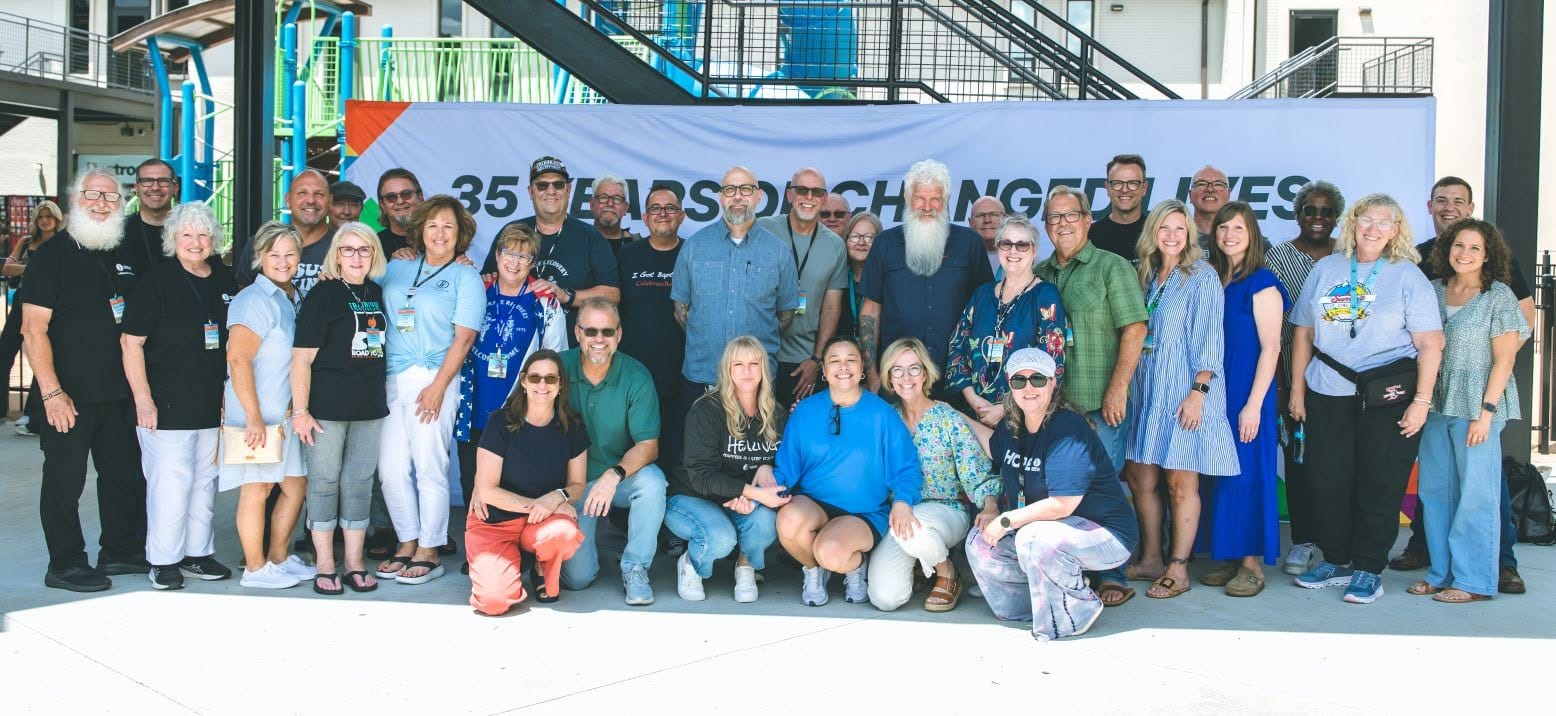
By 2026, Celebrate Recovery had reached its 35th year.
Its official site reports that more than 27,000 people have gone through the ministry at Saddleback Church alone.
Globally, it says Celebrate Recovery has spread to more than 35,000 churches.
Those numbers help show the scale.
But recovery is ultimately measured one person at a time.
One confession.
One day sober.
One relationship repaired.
One boundary established.
One resentment released.
One child learning a healthier way to cope.
One prisoner discovering hope.
One pastor admitting he needs help.
One person realizing that their story doesn't have to end where it is now.
Recovery Becomes Ministry
The final movement of Celebrate Recovery is outward.
Someone comes broken.
Receives help.
Learns the principles.
Works the steps.
Develops relationships.
Experiences healing.
Then eventually turns around.
There is another person walking through the door.
Terrified.
Ashamed.
Convinced nobody will understand.
Now the person who once needed someone beside them can become that person for someone else.
Pain becomes testimony.
Recovery becomes service.
And the place where someone once came desperately needing help becomes the place where God begins using their story to help another person.
At the heart of Celebrate Recovery is the conviction that nobody should have to hide their brokenness or pursue healing alone. Founded by John and Cheryl Baker at Saddleback Church in 1991, the ministry takes the familiar structure of 12-step recovery and places Jesus Christ explicitly at its center, combining the steps with Eight Principles drawn from the Beatitudes. Yet its vision extends far beyond substance addiction. Celebrate Recovery creates space for people confronting a wide range of hurts, hang-ups, and habits, while specialized ministries reach children, teenagers, prisoners, pastors, veterans, and people navigating mental-health struggles. What began with 43 people and four small groups has become a global movement in more than 35,000 churches. The issues differ from person to person, but the invitation remains the same: come out of hiding, tell the truth, walk the recovery journey with others, surrender what you cannot control to Christ, and eventually let God use the story that once brought you shame to bring someone else hope.


