About Adventist World Aviation
What happens when the people who need help most live hours—or even days—away from the nearest hospital, road, or reliable transportation?
Sometimes, reaching them requires an airplane.
Adventist World Aviation (AWA) is a Christian humanitarian aviation organization that uses aircraft and communications to support missionaries and serve isolated communities around the world. A supporting ministry of the General Conference of Seventh-day Adventists, AWA combines aviation with humanitarian service and Christian missions to reach people who might otherwise be incredibly difficult to access.
Its mission is to support those serving the physical, mental, and spiritual needs of unreached and forgotten people.
Why Aviation?
In remote communities, distance can become much more than an inconvenience.
When roads are nonexistent or unreliable, something as basic as reaching a medical clinic can become a serious challenge. A medical emergency that might require a short ambulance ride elsewhere could mean hours of travel by boat, rough roads, or trails.
Aviation can dramatically change that equation.
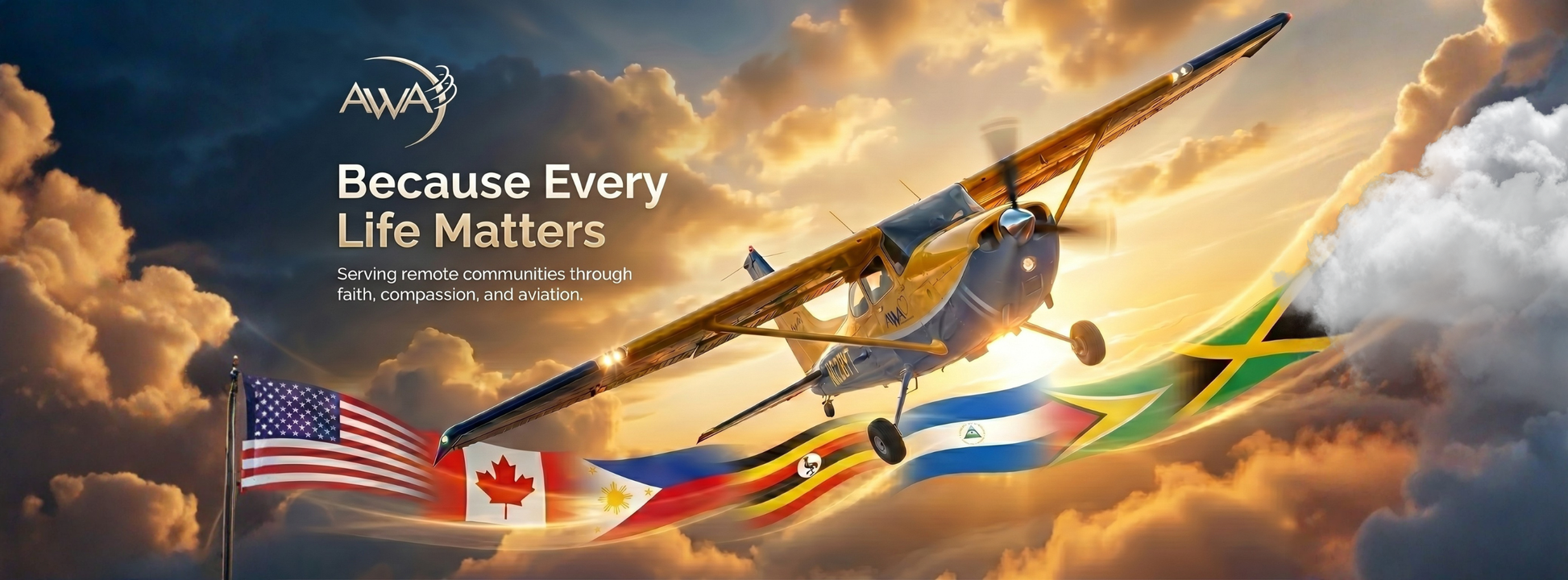
AWA operates a fleet of more than 20 aircraft supporting projects in places including the United States and Alaska, Canada, the Philippines, Nicaragua, and Guyana.
Mission flights can provide medical evacuations, transport healthcare workers and supplies, support vaccination and general medical clinics, assist dental outreach, and make health and lifestyle programs more accessible.
The same aircraft can also support missionaries involved in church planting, Bible studies, and other forms of Christian ministry.
For AWA, the airplane isn't the mission itself. It's a tool that helps the mission reach people who are difficult to reach any other way.
How AWA Began
Adventist World Aviation grew from a practical problem facing frontier missionaries.
Missionaries serving in isolated areas needed dependable aviation support, and church leaders recognized that aircraft could play an important role in reaching communities beyond conventional transportation networks.
That need led to a series of meetings at Andrews University beginning March 24, 1995.
General Conference officials Robert Folkenberg, Leo Ranzolin, and Larry Colburn met with approximately 50 aviation and business professionals to explore how aviation could help fulfill the biblical calling to take the Gospel to "every nation, tribe, language, and people" described in Revelation 14:6.
From those conversations, Adventist World Aviation was established.
Serving the Whole Person
AWA's work reflects the belief that Christian mission involves caring about the whole person.
Sometimes that means helping someone reach lifesaving medical care.
Other times it means bringing doctors or dentists into an isolated community, supporting preventative healthcare, transporting supplies, or helping missionaries reach people with Bible teaching and church planting.
The circumstances may change from one flight to another, but the aircraft provide a connection between remote communities and people who want to serve them.
Preparing Missionary Aviators
Keeping mission aircraft in the air requires more than airplanes.
It requires trained pilots, mechanics, missionaries, and support teams who understand both aviation and the unique challenges of serving in remote environments.
That's why AWA's work also includes schools and flight training connected with its broader missionary aviation efforts. Developing capable aviation personnel helps prepare future workers to continue serving communities where specialized transportation remains essential.
Reaching the Unreached and Forgotten
AWA's vision is to become a leading partner in providing aviation support to organizations and individuals serving at-risk people, regardless of ethnicity or religious or political association.
Supported through donations, the ministry brings together aviation, humanitarian assistance, healthcare, and Christian service in places where geography can easily leave people isolated.
At the heart of Adventist World Aviation is a simple idea: when distance stands between people and the help they need, aviation can help close the gap—carrying hope, healing, practical assistance, and the Gospel to some of the world's hardest-to-reach communities.
 No