


About Bible and Literature Missionary Foundation
A missionary can arrive in another country ready to preach, teach, and make disciples—and still be missing something incredibly basic.
Bibles.
Not digital downloads. Not a website someone might be able to access.
Physical copies of Scripture that can be placed directly into people's hands.
In some parts of the world, getting those Bibles isn't simple. They may be difficult to find in the local language, too expensive for the average family, or unavailable in the quantities missionaries and churches need.
Bible & Literature Missionary Foundation exists to help fill that gap.
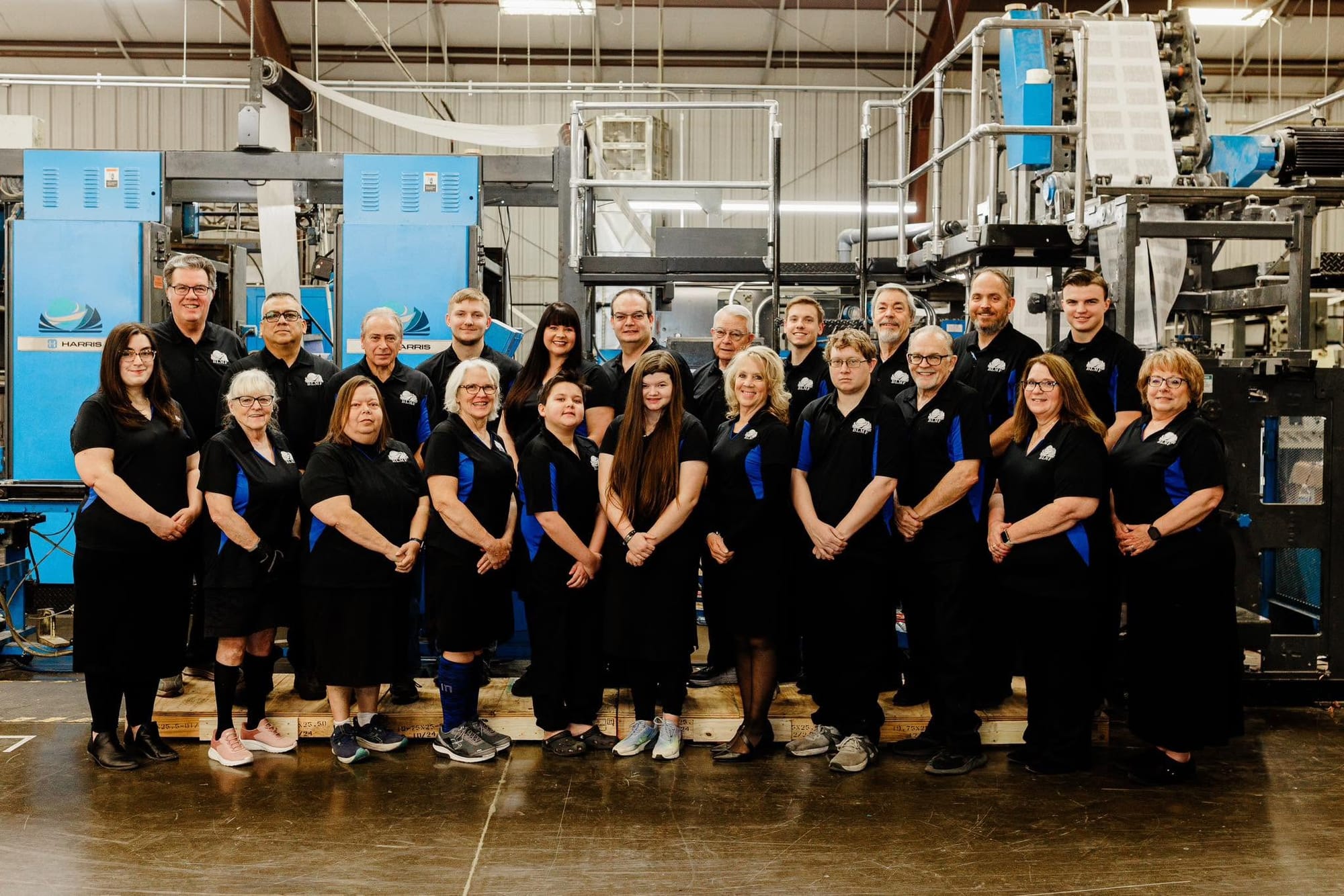
Known as BLMF, this church-based Scripture printing ministry in Shelbyville, Tennessee, has spent decades turning rolls of paper and barrels of ink into Bibles that eventually travel to mission fields around the world.
It Started With a Small Printing Press
BLMF didn't begin with a massive printing operation.
Its story goes back to Fort Worth, Texas, in 1968.
A group of pastors and preachers gathered around a small Multi-lith printing press at Hemphill Baptist Temple and prayed for God's direction over an unusual idea.
What if churches worked together to print Scripture for missionaries?
The ministry was already producing Gospel tracts and portions of the Bible, but the vision was becoming larger.
They wanted to print New Testaments.
Eventually, they wanted to print complete Bibles.
The financial realities made that difficult. Printing Scripture at scale required equipment, paper, ink, labor, and churches willing to financially support something many had never seen done this way before.
BLMF's early leaders kept going.
Their first New Testament came off the press in 1972.
Their first complete Bible followed in 1978.
What began around that small press eventually grew into a ministry capable of sending millions of copies of Scripture across national borders.
One Church Couldn't Do It Alone
An idea from BLMF's early history still explains how the ministry operates.
When people questioned whether a church could realistically take on the enormous task of printing Bibles, founder Bob Lemmon acknowledged the obvious.
One church couldn't.
But churches working together could.
That cooperation remains essential.
Congregations and individual Christians provide the financial support that purchases printing materials. Volunteers can physically participate in preparing Scripture. Missionaries then help place those Bibles into the hands of people who need them.
Each participant handles a different part of the journey.
A church in America may never meet the person overseas who eventually receives the Bible it helped produce.
The connection between them is still very real.
A Roll of Paper Can Become Thousands of Scriptures
Walk into a Bible printing ministry and missions suddenly becomes very physical.
There are enormous rolls of paper.
Printing presses run.
Sheets have to be cut, folded, collated, bound, packed, and eventually shipped.
BLMF helps churches see that process up close.
Through its Hands-to-Hearts Collating Ministry, Christians can participate directly in assembling Scripture. Volunteers may also help around the Tennessee facility with other parts of production and shipping.
That creates a different experience of supporting missions.
Instead of only writing a check, someone can handle the pages that will eventually become another person's Bible.
Children, parents, church members, and volunteers can work together knowing that what they're assembling won't remain in Tennessee.
Those pages are going somewhere.
Print for the Places Where Print Still Matters
It's easy to assume smartphones have made printed Bibles less important.
Globally, the situation is much more complicated.
Internet access isn't universal. Electronic devices cost money and require electricity. Digital Scripture may not always be practical for a pastor teaching a congregation or a missionary distributing resources throughout remote communities.
A printed Bible has different advantages.
Once it arrives, it doesn't need a subscription.
It doesn't need a battery.
A family can keep it. A pastor can preach from it. A new believer can read it repeatedly and eventually hand it to someone else.
That's why BLMF continues investing in something that can appear old-fashioned from the outside.
For many mission fields, paper remains extraordinarily useful.
The Language Has to Travel With the Bible
Sending millions of English Bibles around the world wouldn't solve the problem.
People need Scripture they can understand.
Over the decades, BLMF has printed Scripture in languages spanning regions of Africa, Asia, Europe, the Middle East, the Pacific, and the Americas.
That includes widely spoken languages such as Spanish, French, Arabic, Portuguese, Russian, Hindi, and Vietnamese alongside languages serving much smaller populations.
Each printing project connects the machinery in Tennessee with a particular need somewhere else.
A missionary requests Scripture.
Resources are gathered.
The presses begin running.
Eventually, boxes or containers leave the facility.
The final destination may be thousands of miles away.
The Bible Is the Mission
BLMF's ministry is unusually focused.
It isn't trying to become every kind of missions organization.
Its calling is Scripture.
That focus shapes everything from fundraising to volunteering.
Financial supporters can help cover paper, ink, postage, and shipping. Churches can invite ministry representatives to share the work with their congregations. The Annual Scripture Conference brings people together around Bible printing and reports from mission fields.
Even BLMF's Biblical Heritage Exhibit connects the present-day printing operation with the much longer story of how Scripture has been preserved, translated, printed, and passed from one generation to another.
The printing press becomes part of that story.
Not because the machinery itself is sacred.
Because of what comes off it.
One More Bible
Millions of Scriptures is an impressive number.
But numbers can make it easy to forget what the ministry is actually producing.
Every copy eventually becomes one Bible in one person's hands.
Somewhere, a missionary opens a box.
A pastor receives resources for a congregation that couldn't afford them.
A new Christian receives their first Bible.
Someone reads the Gospel of John in their own language.
The presses in Tennessee may never see any of those moments.
They don't need to.
Their responsibility happens earlier in the story.
Keep printing.
Keep packing.
Keep sending.
Because somewhere beyond the print shop is another person still waiting for a copy of God's Word.
At the heart of Bible & Literature Missionary Foundation is a remarkably practical conviction: if people around the world need Scripture, Christians can work together to put it into their hands. What began with a small printing press in 1968 has become a worldwide Scripture ministry where churches provide, volunteers assemble, missionaries distribute, and millions of printed pages carry the Word of God far beyond the walls of the Tennessee print shop where their journey began.


