


About Bible Believers Fellowship
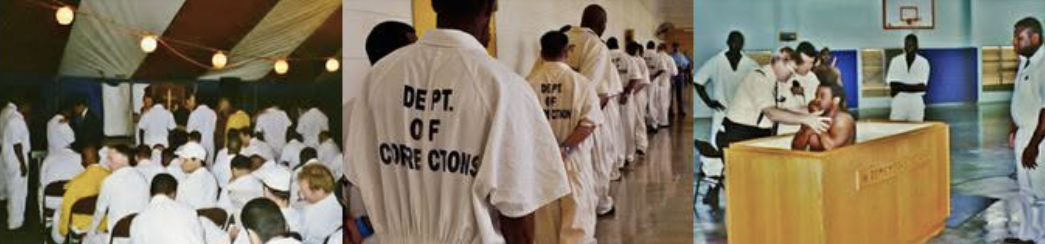
A prison door limits where a person can go.
It doesn't prevent the Gospel from reaching them.
For more than three decades, Bible Believers Fellowship, Inc. has worked from that conviction, helping bring Bibles and Christian teaching into correctional facilities across the United States.
The ministry isn't primarily trying to build programs inside prisons or become an advocacy organization for incarcerated people.
Its focus is narrower.
Give people behind bars opportunities to encounter Jesus Christ.
Sometimes that begins with a Bible placed in someone's hands.
Sometimes it's a booklet read alone in a cell.
A chaplain may distribute a Christian book to someone searching for direction, while another person encounters the ministry's teaching through a newsletter passed from one prisoner to another.
Different materials.
Same message.
Jesus Christ changes lives.
The Ministry Wasn't Part of the Plan
Bible Believers Fellowship didn't begin because its founders had spent their lives preparing for prison ministry.
In fact, they say the direction surprised them.
The organization was incorporated in 1989, and letters from incarcerated people gradually began arriving as its Christian materials found their way into correctional facilities.
Something was happening behind the walls.
People were reading.
They were asking questions about Christianity and writing about what God was doing in their lives.
The ministry continued growing.
By the 1990s, BBFI was supplying correctional facilities across the country with Christian resources, eventually assisting hundreds of institutions.
The website PrisonMinistry.org followed in 1998, giving the organization a remarkably straightforward digital identity.
The address essentially says what the ministry does.
Put Something in the Chaplain's Hands
Prison chaplains face an unusual ministry environment.
There may be far more incarcerated people than one chaplain could personally counsel or teach.
Christian literature helps extend that reach.
BBFI provides chaplains with Bibles, New Testaments, Scripture portions, booklets, Bible studies, tracts, Christian books, and other resources they can distribute inside correctional facilities.
The material can go places the ministry's staff cannot.
A Bible remains available after a chapel service ends.
Someone who isn't comfortable attending a religious gathering can still read privately.
A booklet can be passed to another incarcerated person.
That makes literature a quiet form of prison ministry.
There doesn't always need to be someone standing beside the reader for the conversation with Scripture to begin.
The Good News Can Travel From Cell to Cell
One of BBFI's best examples of that principle is The Good News Letter.
The ministry began distributing the Christian publication to incarcerated readers decades ago.
It contained biblical teaching written to encourage people in their relationship with Christ, and BBFI heard that copies were sometimes used as Bible studies and shared among prisoners.
One copy could keep moving.
Over time, more than a million English copies were distributed, along with a substantial Spanish-language circulation.
Financial limitations eventually forced BBFI to suspend large-scale printed distribution of the newsletter.
The teaching itself didn't disappear.
New issues continue online, while older material remains available.
The delivery method changed because the resources available to the ministry changed.
The purpose remained the same.
Grace Doesn't Pretend the Past Didn't Happen
Prison ministry raises difficult questions about guilt, justice, forgiveness, and consequences.
BBFI doesn't approach those questions by pretending crime doesn't matter.
Its message distinguishes between forgiveness before God and the legal consequences someone may still face for their actions.
A person can genuinely repent and turn to Christ while remaining responsible for a sentence imposed by the justice system.
That distinction gives the ministry's message of grace weight.
Christian conversion isn't presented as an escape from responsibility.
It's an invitation to become different in the middle of it.
The past may explain why someone is sitting inside a prison.
BBFI believes it doesn't have to determine who that person becomes next.
Ministry Without a Shopping List
That focus also explains what BBFI deliberately doesn't do.
Over the years, incarcerated people have contacted the organization asking for money, clothing, legal assistance, and other forms of help.
BBFI maintains clear boundaries.
It isn't a legal advocacy organization or political lobbying group. It doesn't operate a pen-pal program, and its ministry isn't built around supplying personal possessions.
The resources are directed toward evangelism and Christian spiritual growth.
That keeps the organization's identity unusually focused.
Its central question isn't how many different services it can provide inside the correctional system.
It's how faithfully it can continue bringing the Gospel into it.
Hundreds of Facilities, One Person at a Time
Since its early years, Bible Believers Fellowship has assisted hundreds of correctional facilities throughout the United States.
Funding has affected how many it can actively serve at any given time.
The organization openly acknowledges that reality.
There were years when it regularly supplied nearly 500 facilities. As donations declined, the number had to be reduced substantially.
Yet the ministry continued.
Donated Bibles still matter.
A box of Christian books still matters.
A chaplain receiving materials they couldn't otherwise afford still matters.
And somewhere at the end of that chain is an individual person.
That's where the large numbers become personal again.
A Prison Sentence Doesn't Put Someone Beyond the Gospel
Christian prison ministry ultimately rests on an uncomfortable truth about grace.
It reaches people whose worst decisions may be publicly known.
Their failures aren't hidden.
Some have caused tremendous harm.
Yet the Gospel has never been reserved for people with respectable histories.
Bible Believers Fellowship points toward Jesus' words about the sick needing a physician and sinners being called to repentance.
That doesn't minimize wrongdoing.
It explains why the prison isn't considered spiritually hopeless.
A person can be guilty and still need Christ.
A person can be serving a sentence and still open a Bible.
A life marked by destructive choices can still move in another direction.
That's why BBFI keeps sending the materials.
Behind every request from a correctional chaplain are people whose physical movement may be restricted but whose spiritual story is not necessarily finished.
At the heart of Bible Believers Fellowship is the conviction that prison walls can confine a person without placing them beyond the reach of Jesus Christ. By putting Bibles and Christian teaching into the hands of chaplains and incarcerated people across the United States, the ministry carries a simple message into places often associated with failure and hopelessness: guilt is real, consequences are real, but through repentance and faith in Christ, transformation is real too.


