About Assemblies of God World Missions
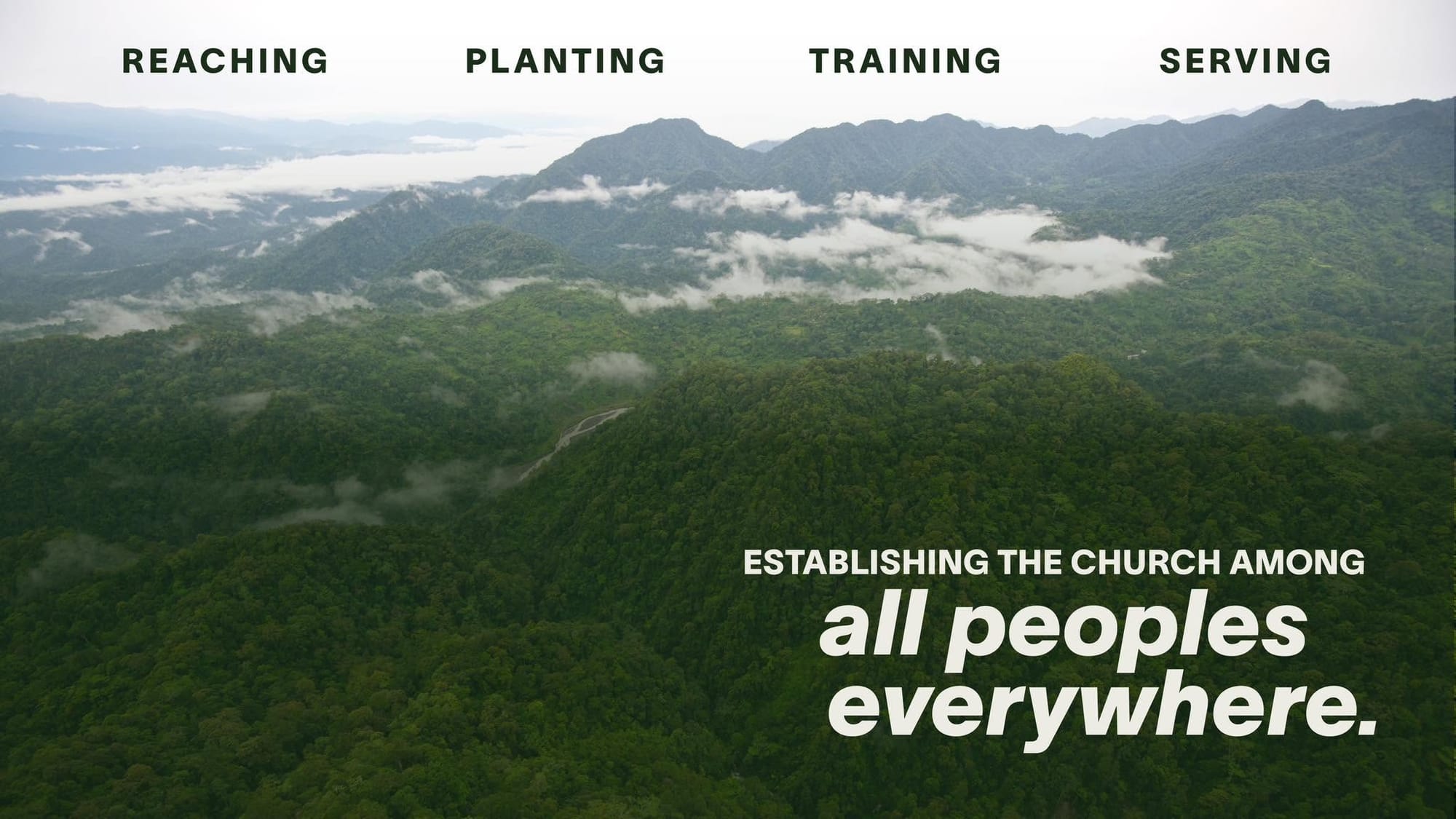
Across the world, there are still communities where someone can live their entire life without meaningful access to the Gospel or a healthy local church. Reaching those places has been at the heart of Assemblies of God World Missions since 1914. As the global missions arm of the U.S. Assemblies of God, AGWM sends and supports missionaries who work alongside local believers to establish the Church among all peoples everywhere. The goal isn't simply to preach the Gospel and move on. It's to see communities of believers take root, develop their own leaders, and eventually carry the Gospel farther themselves.
Establishing the Church
AGWM summarizes its mission in four words:
Reaching. Planting. Training. Serving.
Those aren't meant to function as separate ministries.
They work together.
Someone first needs an opportunity to hear about Jesus. As people respond to the Gospel, believers need a community where their faith can grow.
That leads naturally toward establishing churches.
But a church also needs leaders who understand Scripture and can shepherd people well. Those leaders need preparation.
And throughout that process, Christians encounter people experiencing very real human needs that shouldn't simply be ignored.
For AGWM, establishing the Church brings all of this together.
Going Where Jesus Isn't Yet Known
Missionaries have served in places where Christianity has existed for centuries.
But AGWM is increasingly directing attention toward people who still have little or no access to the Gospel.
Some communities have very few Christians.
Others have no established church capable of sharing Christ within their own culture.
AGWM's current Gospel Access Vision is particularly focused on these spiritually underserved places. The organization has committed to expanding its missionary force toward 4,000 workers by 2033 as it seeks greater engagement with unreached and unengaged people groups.
The emphasis isn't simply on sending more missionaries.
It's sending people where they're most needed.
Planting Something That Can Grow Without You
When missionaries enter a new community, AGWM doesn't want the church that emerges to remain permanently dependent upon them.
Its church-planting philosophy has historically emphasized indigenous churches.
That means local congregations become capable of supporting themselves and governing themselves. They also learn to share the Gospel and reproduce.
Eventually, local believers become pastors.
Churches plant churches.
National movements develop missionaries of their own.
The missionary who originally arrived from somewhere else becomes less central because the Church has taken root within the culture itself.
That's the kind of multiplication AGWM is pursuing.
Preparing Leaders for What Comes Next
Rapid church growth creates another challenge.
Who will shepherd all these people?
Training has therefore remained central to AGWM's missionary strategy.
Missionaries work alongside national churches to prepare pastors and other Christian leaders who can serve their own communities effectively.
The objective reaches beyond giving someone theological information.
Leaders are being prepared to disciple believers and teach Scripture faithfully. As those leaders mature, they can begin preparing others.
That multiplication matters because a missionary can only personally train so many people.
A national church capable of developing its own leaders can continue growing long after the original missionary is gone.
Serving People With the Compassion of Christ
Sometimes sharing the Gospel brings missionaries face-to-face with suffering.
AGWM believes Christians shouldn't look away.
Missionaries and national churches serve people experiencing poverty or other serious needs while maintaining the ministry's larger Gospel purpose.
A village in Cameroon offers a picture of how those pieces can come together.
A small local congregation was struggling while its surrounding community dealt with unsafe drinking water. AGWM-related ministries and Cameroonian Christians helped provide water filters while local believers shared the Gospel.
As relationships changed, the congregation grew.
Other ministry partners helped provide a church structure.
Then the local pastor received biblical training.
What began with one woman's prayer eventually became a community with cleaner water, a growing congregation, and a trained local pastor.
That's what AGWM means when it talks about reaching, planting, training, and serving working together.
The Local Church Sends
Missionaries don't simply appear.
Someone sends them.
AGWM sees the local church as essential to that process.
Churches recognize and develop people who sense God's call to missions. They pray for them and financially support them. Then those sons and daughters are sent into another part of the world.
The relationship continues after they leave.
AGWM provides organizational structure and missionary preparation, but missions remains connected to the churches back home.
And increasingly, that sending isn't flowing in only one direction.
The churches established through generations of missions are themselves becoming missionary-sending movements.
The people who were once reached are now going.
All Peoples Everywhere
More than a century has passed since the Assemblies of God began organizing its global missionary work.
Countries have changed.
Mission strategies have developed.
National churches that once barely existed have grown into enormous Christian movements.
But there are still people without meaningful access to the Gospel.
So the mission continues.
Someone goes.
People hear about Jesus.
Believers gather.
A church takes root.
Leaders emerge.
Then one day, that church looks toward another community where Christ isn't yet known and realizes something:
Now it's their turn to go.
At the heart of Assemblies of God World Missions is the conviction that the Gospel belongs among every people, not merely every country. By sending missionaries where Christ is not yet known and working alongside local believers to establish healthy, indigenous churches, AGWM seeks to develop communities that can eventually lead themselves, multiply themselves, and carry the Gospel beyond themselves—until all peoples everywhere have access to Jesus.